At Stoned Cats, farming is not just where the catnip comes from — it is part of the plushie rehabilitation process itself.
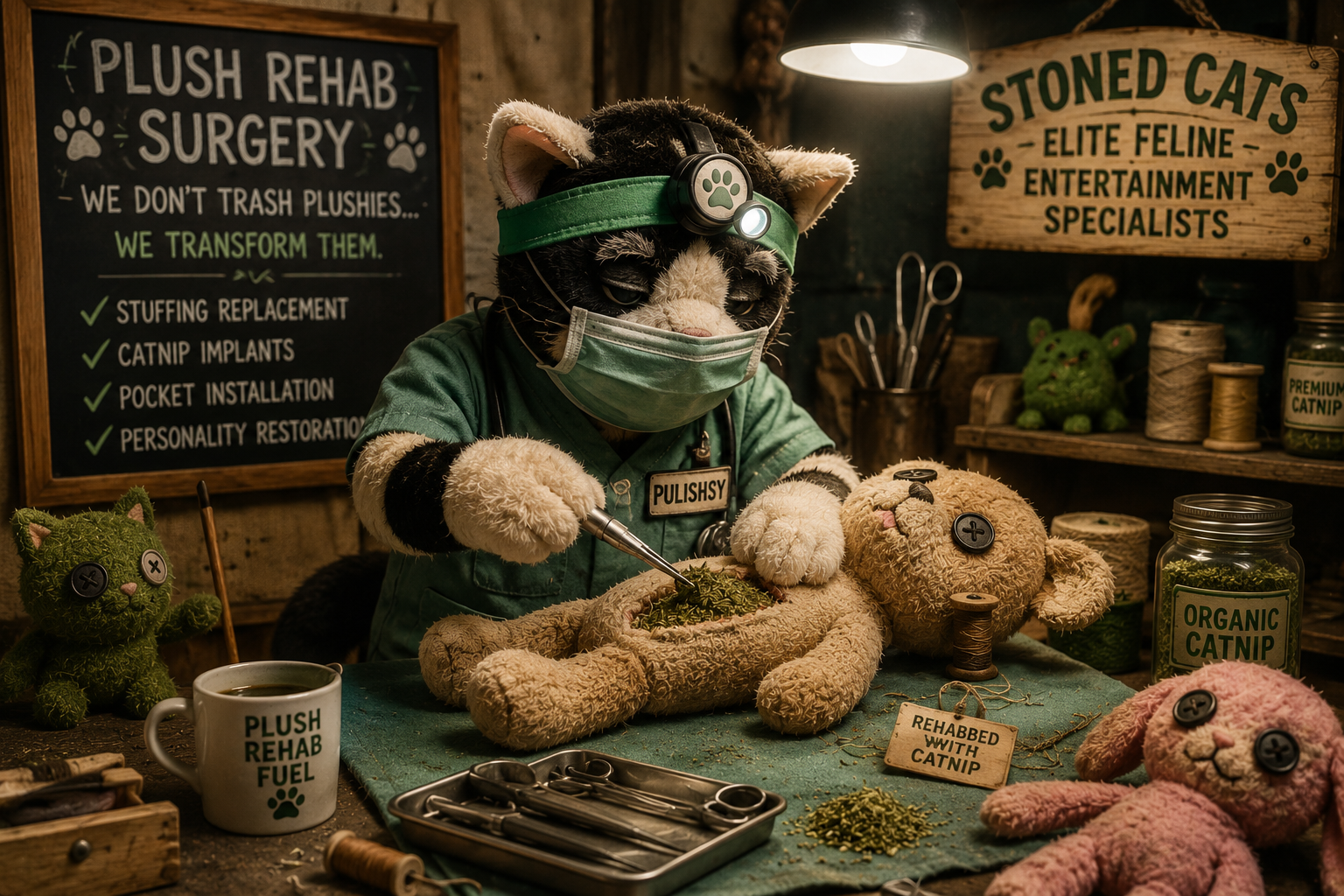
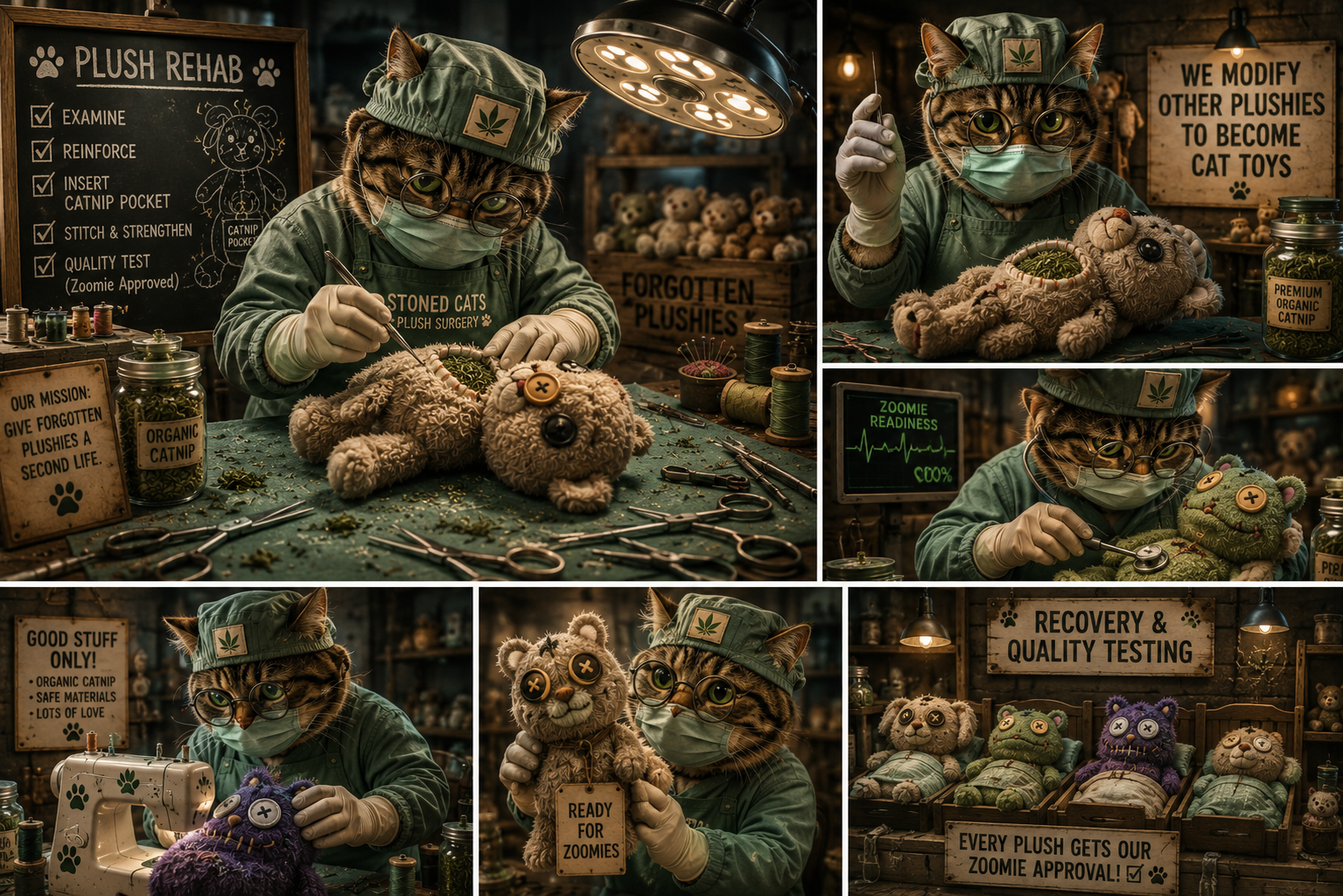
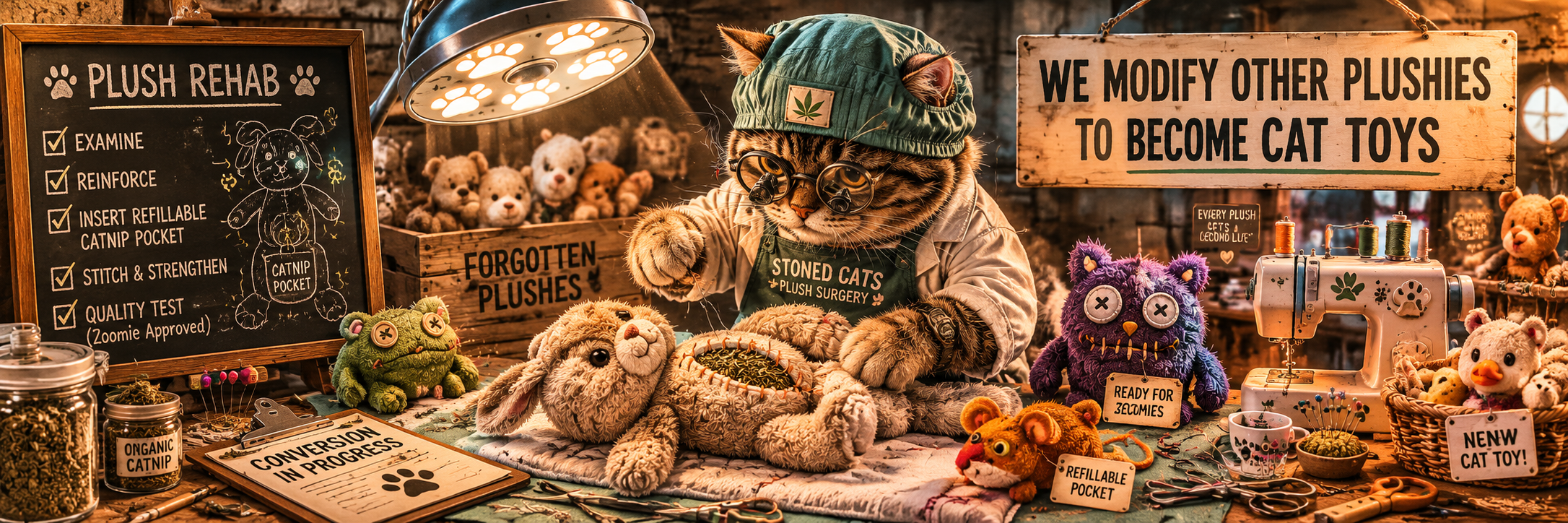
Every rescued plushie that arrives at the workshop begins a journey. Some were forgotten in attics. Some sat abandoned on thrift store shelves. Others were worn out from years of adventures with their original humans. Instead of ending up in a landfill, they are given a second life as elite feline entertainment specialists.
But before a plushie can graduate into a certified cat toy, it has to reconnect with nature.
The process
The Plushie Rehabilitation Farm
The Stoned Cats farm is where rescued plushies recover from years of neglect and rediscover their purpose. Surrounded by rows of organically grown catnip, the plushies spend time “working the fields,” helping with harvesting, drying, and preparing the very catnip that will later power their new mission in life.
Of course, the plushies are not doing heavy labor — they are undergoing rehabilitation.
Photos from the farm often show plushies riding tiny tractors, supervising catnip drying racks, relaxing in the fields, or helping load bales of fresh catnip into the barn. The idea is playful and ridiculous on purpose, but it reflects a real philosophy behind the brand:
Nothing should go to waste if it can be given a second chance.
The result is:
- Less waste
- Longer-lasting toys
- Better catnip freshness
- A more sustainable product cycle
Every toy has a story
From Forgotten Plushie to Feline Specialist
Some become barn supervisors. Some become field inspectors. Others specialize in “advanced couch ambush tactics” once they reach their forever home with a cat.
Part of the fun of Stoned Cats is imagining that every toy has gone through a strange rehabilitation program somewhere deep in the countryside — learning responsibility, reconnecting with the earth, and preparing for a new career in cat entertainment.
The farming theme also reflects the company’s commitment to recycling and local production. By combining rescued plushies with farm-grown catnip, the process becomes more than just manufacturing. It becomes storytelling.
Sustainable Chaos
Cats are chaotic creatures. The toys should be too.
The goal is not to create perfect factory-made products that all look identical. Every rehabilitated plushie has different scars, personalities, shapes, and expressions. Some look surprised. Some look suspicious. Some look like they have seen things no plushie should ever see.
That individuality is part of the charm.
And somewhere out on the farm, another rescue plushie is probably learning how to drive a tractor through a field of catnip while preparing for its next assignment: becoming someone’s favorite cat toy.